

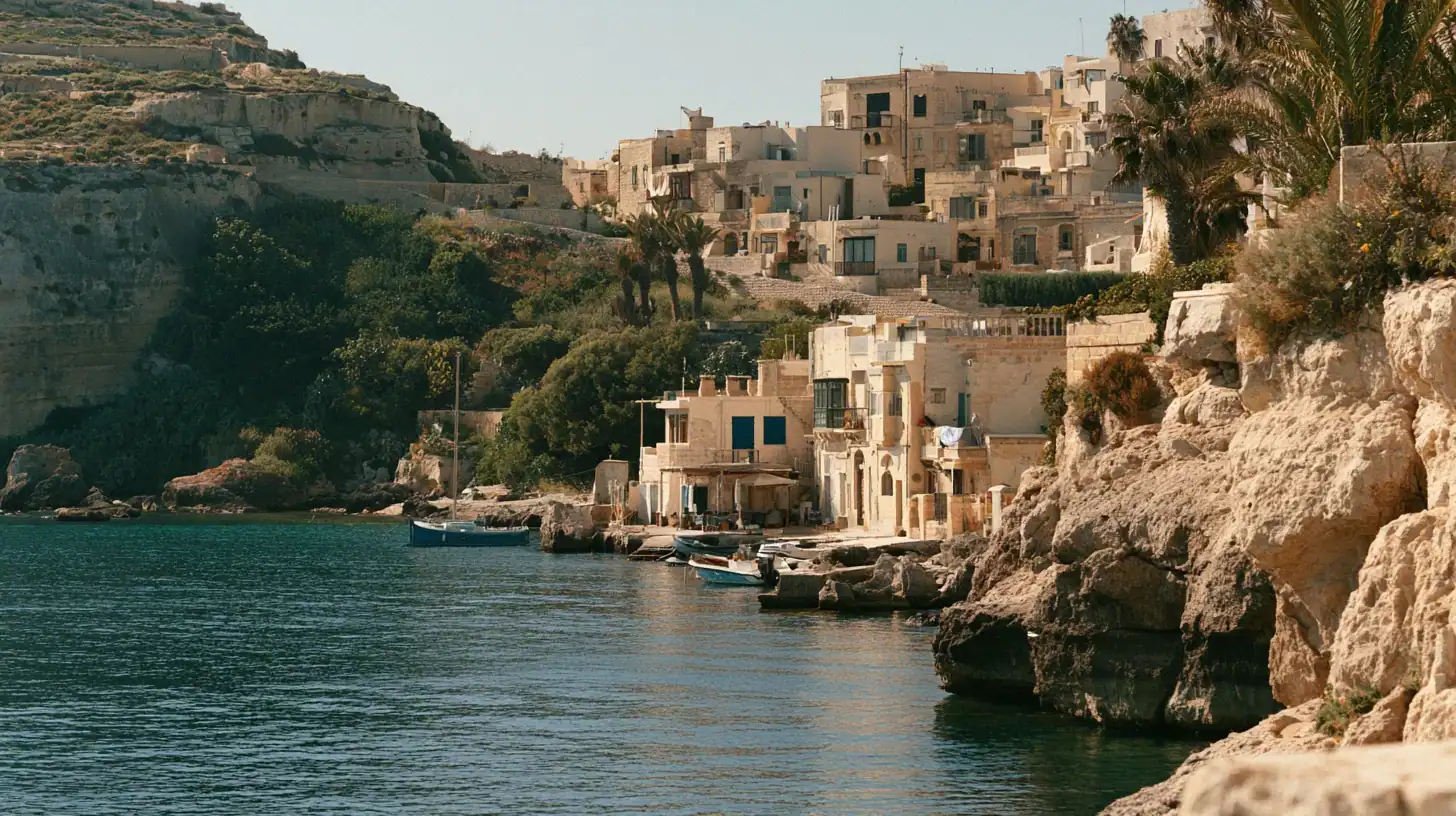
The Malta Permanent Residence Programme (MPRP) is a residency-by-investment programme that grants third-country nationals indefinite permanent residence in an EU member state without requiring them to live there.
Quick answer. The Malta Permanent Residence Programme grants indefinite permanent residence in Malta to non-EU nationals for mandatory government payments of EUR 99,000, plus a qualifying property held for five years, either bought for at least EUR 375,000 or rented at at least EUR 14,000 a year. The Malta Permanent Residence Programme carries no minimum stay requirement and gives no entitlement to Maltese citizenship.
Malta stopped selling citizenship in 2025. What remains is a residence programme, and the distinction matters more than any other fact on this page. This article sets out what the Malta Permanent Residence Programme costs as at 1 September 2026, what it obliges you to do, and where it sits against the European alternatives.
Key facts at a glance
Malta Permanent Residence Programme: statutory requirements. All figures taken from Subsidiary Legislation 217.26, the Malta Permanent Residence Programme Regulations, as amended by Legal Notice 146 of 2025. Checked 1 September 2026.
| Item | Requirement as at 1 September 2026 |
|---|---|
| Legal basis | S.L. 217.26, made under article 7A of the Immigration Act (Cap. 217) |
| Status granted | Permanent residence, indefinite (reg. 10(1)) |
| Administration fee | EUR 60,000 (First Schedule) |
| Government contribution | EUR 37,000 (First Schedule) |
| NGO donation | EUR 2,000 (reg. 3) |
| Qualifying property | Purchase at EUR 375,000 or more, or rent at EUR 14,000 a year or more, in Malta or Gozo (reg. 3) |
| Property holding period | Five years from the appointed day (reg. 15(1)(c)) |
| Capital test | EUR 500,000 of assets including EUR 150,000 financial, or EUR 650,000 including EUR 75,000 financial (reg. 9(2)) |
| Minimum stay | None stated in the regulations |
| Route to citizenship | None. The regulations do not mention naturalisation |
| Schengen travel | 90 days in any 180-day period, under article 21 of the Schengen Convention |
What is the Malta Permanent Residence Programme?
The Malta Permanent Residence Programme is governed by Subsidiary Legislation 217.26, made under article 7A of the Immigration Act. It is open to third-country nationals aged 18 or over who are not citizens of Malta, the EEA or Switzerland (regulations 9(1) and 15(1)(a)), and applications must be filed through an agent licensed by the Residency Malta Agency (regulation 4(1)).
A successful applicant receives a certificate which, under regulation 10(1), entitles the holder and approved dependants to reside, settle or stay indefinitely in Malta. The Residency Malta Agency monitors compliance annually for the first five years and thereafter at its discretion (regulation 10(3)).
Four financial elements must be satisfied: a non-refundable administration fee, a government contribution, a donation to a Maltese non-governmental organisation, and a qualifying property. There is also a capital test. Under regulation 9(2) the main applicant must show assets of at least EUR 500,000, of which at least EUR 150,000 is in financial assets, or assets of at least EUR 650,000, of which at least EUR 75,000 is financial. That capital must be retained for five years from the appointed day (regulation 15(1)(g)).
The definition of dependant in regulation 3 is unusually wide. It covers a spouse or equivalent partner, children under 18, unmarried children aged 18 to 28 who are principally dependent on the main applicant, parents and grandparents who are not in full-time employment and are principally dependent, and adult children certified as having a disability. The Residency Malta Agency describes this as the ability to include up to four generations in one application.
What does the Malta Permanent Residence Programme cost in 2026?
The fee structure changed on 22 July 2025, when Legal Notice 146 of 2025 substituted the First Schedule to S.L. 217.26. Regulation 16 of that Legal Notice is a transitory provision: the new fees and contributions apply to applications submitted after 1 January 2025 that had not concluded when the amendment came into force, and the earlier figures shall no longer apply. Any cost table published before July 2025 is therefore out of date, including for applicants who filed earlier that year.
Malta Permanent Residence Programme: mandatory government payments, single applicant. Sources: First Schedule to S.L. 217.26 as substituted by Legal Notice 146 of 2025; regulation 3; Residency Malta Agency. Checked 1 September 2026.
| Payment | Amount | When it falls due |
|---|---|---|
| Administration fee, first instalment | EUR 15,000 | Within one month of submitting the application |
| Administration fee, balance | EUR 45,000 | Within two months of the Letter of Approval in Principle |
| Government contribution | EUR 37,000 | Within eight months of the Letter of Approval in Principle |
| NGO donation | EUR 2,000 | Before the certificate is issued |
| Residence card | EUR 500 per person | Covers five years |
| Total mandatory government payments | EUR 99,000 | Plus EUR 500 per residence card |
Three points about this table are widely reported incorrectly.
The contribution is the same whether you buy or rent. The First Schedule sets EUR 37,000 where the necessary title to a qualifying property is a qualifying owned property, and EUR 37,000 where the necessary title is a qualifying rented property. There is no longer a premium for renting.
There is no reduced threshold for Gozo or the South of Malta. Regulation 3 defines a qualifying owned property as one acquired for not less than EUR 375,000 for a property situated in Malta or Gozo, and a qualifying rented property as one leased for not less than EUR 14,000 a year on the same geographic basis. The regulations as consolidated to 22 July 2025 contain no regional discount.
The EUR 7,500 dependant fee does not apply to most dependants. The proviso to the First Schedule exempts a spouse, children under 18, and certified disabled adult children from any administration fee. It bites only on unmarried adult children aged 18 to 28 and on dependent parents and grandparents. A married couple with two children under 18 therefore pays the same EUR 99,000 in mandatory government payments as a single applicant, and differs only in the EUR 500 residence card fee for each person.
A number worth doing yourself
Comparing the purchase route with the rental route on the headline figures is misleading, because one of them buys an asset and the other does not. The comparison that matters is unrecoverable cash over the five-year holding period required by regulation 15(1)(c).
On the rental route, a single applicant spends EUR 99,000 in government payments, EUR 500 for a residence card, and a minimum of EUR 14,000 a year in rent for five years, which is EUR 70,000. That is EUR 169,500 of unrecoverable cash, before any professional or due diligence costs.
On the purchase route the same applicant spends EUR 99,500 in unrecoverable cash and commits EUR 375,000 to a property that can be sold after five years. Buying therefore costs less in unrecoverable cash than renting unless the property falls by more than EUR 70,000 over the five years, which is 18.7% of EUR 375,000.
That is the honest way to frame the choice. If you expect Maltese residential values to fall by less than a fifth over five years, and you are content to hold an illiquid asset in a small market, buying is the cheaper route. If not, renting costs roughly EUR 70,000 more but keeps EUR 375,000 in your control. Neither answer is universally right, and anyone who tells you the purchase route is simply better value has not done the subtraction.
Professional fees, due diligence charges, notarial costs and property acquisition taxes sit on top of all of the above and vary by case. We do not publish fee ranges for those, because they depend on family size and complexity, and they are confirmed in your personalised quote.
Can you still buy Maltese citizenship?
No. Malta has had no citizenship-by-investment route since 2025, and the Malta Permanent Residence Programme is not one.
This is commonly reported as Malta offering the only citizenship-by-investment programme in the European Union, and a great deal of material still online was written when that was true. The actual position is that the route was dismantled across 2025, because the Court of Justice of the European Union held it unlawful.
In Case C-181/23, Commission v Malta, decided by the Grand Chamber on 29 April 2025, the Court held that by operating its 2020 investor citizenship scheme Malta infringed article 20 TFEU and article 4(3) TEU. The Court reasoned that granting nationality, and with it Union citizenship, in direct exchange for predetermined investments or payments through a transactional procedure is incompatible with the concept of Union citizenship and breaches the principle of sincere cooperation.
Malta then removed the machinery:
- Legal Notice 159 of 2025, of 29 July 2025, deleted regulations 15 to 19, 21, 30 and 31 and the Second Schedule from what is now S.L. 188.06, which is where the direct investment framework and its contribution schedule actually sat. Regulation 25 provides that applications under the old Part IV not approved before 29 April 2025 cease to have effect.
- Act XXI of 2025, the Maltese Citizenship (Amendment) Act, in force 24 July 2025, deleted the definition of individual investor programme from article 2 of the Maltese Citizenship Act (Cap. 188), and substituted article 10(9) with a naturalisation-by-merit provision that removes the words investors and through investment from the qualifying categories.
- The Agents (Licences) Regulations, S.L. 188.05, which supported the investment programme, were repealed outright by Legal Notice 58 of 2026 on 13 March 2026.
What survives under article 10(9) is a discretionary merit route for scientists, researchers, athletes, artists, entrepreneurs, philanthropists and technologists. The regulations that once fixed a price for it have been deleted. Any figure quoted to you as the cost of Maltese citizenship has no basis in the legislation as it currently stands.
One caveat, because it is the honest reading. Article 24(1)(h) of Cap. 188 still empowers the making of regulations providing for contributions or investments in respect of naturalisation. The enabling power survives even though nothing exercises it, so a future government could in principle reinstate a payment-based scheme by legal notice, though it would face the same judgment that closed the last one.
The Residency Malta Agency puts the point plainly on its own programme page: the MPRP grants permanent residence in Malta and is distinct from the separate legislative provisions governing citizenship.
The question we field most often about Malta is whether the residence permit leads to a passport. It is almost always asked by someone working from material written before April 2025, and it is the first thing we correct.
Do you have to live in Malta to keep MPRP status?
The Malta Permanent Residence Programme regulations contain no minimum stay requirement. There is no day count anywhere in S.L. 217.26.
What the regulations do impose are continuing conditions, monitored annually for the first five years under regulation 10(3). Under regulation 15(1) the beneficiary must hold the qualifying property for five years from the appointed day and must continue to hold a residential property in Malta or Gozo thereafter; must retain the capital tested under regulation 9(2) for five years; must hold health insurance covering the risks normally covered for Maltese nationals; must have stable and regular resources sufficient to live without recourse to Maltese social assistance; and must hold a valid travel document. Failure on any of these can lead to the certificate being withdrawn under regulation 17.
Legal Notice 146 of 2025 also added regulation 9(6), which allows an applicant to apply for a one-year temporary residence permit while the main application is processed, renewable annually provided the full documentation is submitted within six months of the application. That is a practical improvement for families who want to move before a decision lands.
A note on what the absence of a stay requirement does not mean. Malta imposes none, but the country you are leaving may still treat you as tax resident, and residence rights are not the same thing as tax residence. We set out that distinction in our guide to retiring and relocating to Europe.
Does the MPRP lead to Maltese citizenship?
Holding a Malta Permanent Residence Programme certificate gives no entitlement to Maltese citizenship. The word naturalisation does not appear in S.L. 217.26 at all, and the only reference to citizenship in those regulations is a disqualifier: an applicant must not previously have had an application for Maltese citizenship refused.
Naturalisation is governed separately by article 10(1) of the Maltese Citizenship Act (Cap. 188). It requires residence in Malta throughout the twelve months immediately preceding the application, plus aggregate residence of at least four years during the six years before that twelve-month period. That is five years of residence measured across a seven-year window, of which the final year must be continuous. The applicant must also show adequate knowledge of Maltese or English, be of good character, and be a suitable citizen of Malta, and must take the oath of allegiance under article 10(5). Dual citizenship is expressly lawful under article 7.
Two features of that provision deserve more weight than they usually get. First, article 10(1) says a person may be granted a certificate if he satisfies the Minister. It is a discretion, not an entitlement, and it reads very differently from the entitlement language used elsewhere in the same Act. Second, article 19 provides that the Minister shall not be required to assign any reason for the grant or refusal of any application under the Act, and that the decision shall not be subject to appeal to or review in any court.
So the honest summary is this. Malta’s nominal residence period for naturalisation is shorter than Portugal’s, but it requires genuine residence, it is discretionary, and it cannot be appealed. Nothing about buying into the Malta Permanent Residence Programme advances it.
How does Malta compare with the Portugal Golden Visa?
Malta Permanent Residence Programme compared with the Portugal Golden Visa fund route. Sources: S.L. 217.26; Lei n.º 23/2007 article 3(1)(d); Decreto Regulamentar n.º 84/2007 article 65.º-C; Lei n.º 37/81 as amended by Lei Orgânica n.º 1/2026. Checked 1 September 2026.
| Malta MPRP | Portugal Golden Visa (fund route) | |
|---|---|---|
| Status granted | Permanent residence, indefinite | Temporary residence, renewable |
| Capital into the programme | EUR 99,000 in fees, contribution and donation, none recoverable | EUR 500,000 into a qualifying non-property fund, recoverable subject to fund performance |
| Property requirement | EUR 375,000 purchase or EUR 14,000 a year rent, held five years | None. Residential property routes removed on 7 October 2023 by Lei n.º 56/2023 |
| Minimum stay | None in the regulations | 7 days in the first year, 14 days in each subsequent two-year period |
| Residence for naturalisation | 4 years aggregate in 6, plus 12 continuous months, discretionary | 10 years for most non-EU, non-CPLP nationals |
| Schengen travel | 90 days in any 180 | 90 days in any 180 |
The two programmes solve different problems. Malta suits someone who wants settled European residence status now, at a defined and comparatively modest cash cost, and who does not need a citizenship outcome. Portugal suits someone whose capital can sit in a fund rather than be spent, and who is prepared to run a long clock for an eventual EU passport.
Two Portuguese details are worth knowing before making that comparison. Portugal’s naturalisation period rose to ten years for most non-EU nationals under Lei Orgânica n.º 1/2026, in force 19 May 2026, and the same law revoked article 15(4) of the Nationality Act, which had allowed time waiting in the AIMA queue to count. Both changes make Portugal’s citizenship timeline materially longer than the headline suggests. We set both out in Portugal’s 2026 nationality law, and the fund route itself in our Portugal Golden Visa guide and our note on choosing a Portuguese fund.
For the third European option, see our Greece Golden Visa guide, and for a residence programme built around a tax regime rather than a property, our Italy investor visa and flat tax guide.
Does the MPRP change where you pay tax?
Not by itself. A Malta Permanent Residence Programme certificate confers a right of residence. It does not make you tax resident in Malta, and S.L. 217.26 contains no tax provision at all.
Maltese personal taxation turns on residence and domicile, and on whether foreign income is remitted to Malta. PwC’s Worldwide Tax Summaries, reviewed 26 August 2026, notes that Malta has few specific statutory rules on residence, ordinary residence, domicile or remittance, and that whether income has been remitted to Malta is a question of fact. Malta also operates separate special tax programmes with their own conditions and their own application processes, which are distinct from the MPRP and are not acquired with it.
We are not tax advisers, and this is the part of a Malta plan that most needs specialist input on both sides of the move. The expensive mistakes are usually made in the country being left, not the country being joined.
Our view: who the Malta Permanent Residence Programme suits
The Malta Permanent Residence Programme is a good product for a narrow purpose, and it is oversold for everything else.
It does one thing very well. For EUR 99,000 in government payments plus a property commitment, a family of up to four generations obtains indefinite residence rights in an EU member state, with no obligation to live there, in a jurisdiction whose working language is English and whose legal system is familiar to anyone from a common law background. Compared with the capital required for Portugal or Greece, the cash cost is modest and the status granted is stronger, because it is permanent from the outset rather than a temporary permit that must be renewed.
It is the wrong product if a passport is the objective. Malta closed that door in 2025, and it is now closed in every EU member state, not just Malta. Anyone selling a European programme today on the strength of an eventual EU citizenship should be asked to name the statute and the number of years, and the answer for Portugal is now ten.
It is also the wrong product if you are unwilling to hold Maltese property for five years. That obligation is the real commitment in the programme, and it is the one applicants most often underestimate. On the rental route it is EUR 70,000 of spending that buys nothing but eligibility. On the purchase route it is EUR 375,000 in a small and illiquid market, which should be judged as a property investment on its own merits rather than as a visa.
Our general position on residence programmes applies here as much as anywhere. Choose the programme on the terms of its residence and its obligations, not on a travel benefit that another government can reprice, and not on a citizenship outcome that the law does not actually promise.
Frequently asked questions
How much does the Malta Permanent Residence Programme cost in 2026?
The Malta Permanent Residence Programme requires mandatory government payments of EUR 99,000: an administration fee of EUR 60,000, a government contribution of EUR 37,000 and an NGO donation of EUR 2,000. Residence cards cost EUR 500 per person for five years. A qualifying property is required in addition, either bought for at least EUR 375,000 or rented at at least EUR 14,000 a year. Figures verified 1 September 2026 against the First Schedule to S.L. 217.26.
Does the Malta Permanent Residence Programme have a minimum stay requirement?
No. S.L. 217.26 contains no minimum stay or physical presence requirement. Continuing conditions on property, capital, health insurance and resources apply instead, and are monitored annually for the first five years under regulation 10(3).
Can I get Maltese citizenship through the Malta Permanent Residence Programme?
No. The MPRP grants residence only and gives no entitlement to naturalisation. Maltese citizenship by naturalisation requires, under article 10(1) of Cap. 188, twelve continuous months of residence immediately before the application plus four years aggregate residence in the preceding six years, and is granted at the Minister’s discretion.
Is Malta still selling citizenship by investment?
No. The Court of Justice of the European Union held Malta’s investor citizenship scheme unlawful in Case C-181/23 on 29 April 2025, and the implementing provisions were deleted by Legal Notice 159 of 2025 and amended by Act XXI of 2025. No EU member state operates a citizenship-by-investment programme as at 1 September 2026.
Is the property threshold lower in Gozo or the South of Malta?
No. Regulation 3 of S.L. 217.26 sets a single threshold of EUR 375,000 for purchase and EUR 14,000 a year for rent, in each case for a property situated in Malta or Gozo. The regulations as consolidated to 22 July 2025 contain no regional reduction.
Do I pay EUR 7,500 for every dependant?
No. The proviso to the First Schedule exempts a spouse, children under 18 and certified disabled adult children from the dependant administration fee. It applies only to unmarried adult children aged 18 to 28 and to dependent parents and grandparents who are not in full-time employment.
How long does a Malta Permanent Residence Programme application take?
The Residency Malta Agency does not publish a guaranteed decision period, and we do not quote one. Since 22 July 2025, regulation 9(6) allows applicants to hold a one-year renewable temporary residence permit while the application is processed, which reduces the practical consequence of the wait.
Can I apply for the Malta Permanent Residence Programme directly?
No. Regulation 4(1) requires applications to be submitted through an agent licensed by the Residency Malta Agency. Legal Notice 146 of 2025 rebuilt the licensing regime, requiring agents to be accountants, auditors, lawyers or licensed financial advisers, to carry professional indemnity cover of at least EUR 500,000, and to pay an annual licence fee of EUR 5,000.
Figures verified 1 September 2026.
This article is general information, not legal, tax or investment advice. Investment migration rules and tax rules change frequently and depend on your personal circumstances. Figures are correct as at the date shown and should be confirmed before you act. Speak to a qualified adviser, and contact Citizenship360 for guidance specific to your situation.
Sources
- Subsidiary Legislation 217.26, Malta Permanent Residence Programme Regulations (Legal Notice 121 of 2021, as amended by Legal Notices 57 and 310 of 2024 and 146 of 2025), consolidated to 22 July 2025. legislation.mt. Checked 1 September 2026.
- Legal Notice 146 of 2025, Malta Permanent Residence Programme (Amendment) Regulations, 2025. residencymalta.gov.mt. Checked 1 September 2026.
- Residency Malta Agency, Malta Permanent Residence Programme. residencymalta.gov.mt. Checked 1 September 2026.
- Court of Justice of the European Union, Case C-181/23 Commission v Malta, Grand Chamber, judgment of 29 April 2025, and Press Release No 52/25. curia.europa.eu. Checked 1 September 2026.
- Maltese Citizenship Act, Chapter 188 of the Laws of Malta, consolidated to 24 July 2025. legislation.mt. Checked 1 September 2026.
- Act XXI of 2025, Maltese Citizenship (Amendment) Act, Government Gazette of Malta No. 21,474, 24 July 2025. legislation.mt. Checked 1 September 2026.
- Legal Notice 159 of 2025, amending S.L. 188.06, Government Gazette No. 21,478, 29 July 2025. legislation.mt. Checked 1 September 2026.
- Legal Notice 58 of 2026, Agents (Licences) (Repeal) Regulations, 2026, 13 March 2026. legislation.mt. Checked 1 September 2026.
- Lei n.º 23/2007 de 4 de julho, article 3(1)(d), consolidated text incorporating Lei n.º 61/2025. pgdlisboa.pt. Checked 1 September 2026.
- Lei n.º 56/2023 de 6 de outubro, articles 42 and 44. dre.pt. Checked 1 September 2026.
- Decreto Regulamentar n.º 84/2007, article 65.º-C, as inserted by Decreto Regulamentar n.º 15-A/2015. dre.pt. Checked 1 September 2026.
- Lei Orgânica n.º 1/2026 de 18 de maio, amending Lei n.º 37/81. dre.pt. Checked 1 September 2026.
- PwC Worldwide Tax Summaries, Malta, Individual Residence, last reviewed 26 August 2026. taxsummaries.pwc.com. Checked 1 September 2026.
- Convention Implementing the Schengen Agreement, article 21, as amended by Regulation (EU) No 610/2013.

Author

Author

Author

Author

Author
Tom Purdy
Founder & Managing Director
- Adviser Profile
- Adviser Profile
- Adviser Profile
- Adviser Profile
Head of Cross-Border Financial Planning
Head of Marketing
Head of Business Development, Americas
Financial Director