Arrange a Private Consultation
Find out how we can help you in 15 minutes.

Arrange a Private Consultation
Find out how we can help you in 15 minutes.

Arrange a Private Consultation
Find out how we can help you in 15 minutes.

Arrange a Private Consultation
Find out how we can help you in 15 minutes.

Arrange a Private Consultation
Find out how we can help you in 15 minutes.

Arrange a Private Consultation
Find out how we can help you in 15 minutes.
Egypt, a nation bridging Northeast Africa and the Middle East, offers a Citizenship by Investment (CBI) programme through Citizenship360. Known for its rich history, cultural heritage, and rapidly developing economy, Egypt provides an opportunity for investors to secure a second citizenship that grants access to a strategic regional market and emerging growth sectors.
The Egyptian CBI programme is recognised for its clear investment criteria, inclusive family policies, and a relatively straightforward path to citizenship.

Egyptian citizenship offers more than travel privileges. For internationally minded individuals and families, it can form part of a broader strategy focused on regional access, long-term security, and jurisdictional diversification. The benefits below outline why Egypt is considered within certain global citizenship planning strategies.
Egyptian citizenship provides visa-free or visa-on-arrival access to a range of countries, particularly within parts of Africa, Asia, and the Middle East. While not offering as extensive visa-free travel as some other CBI programmes, it still enhances global mobility compared to many nationalities, facilitating travel for business and leisure.
Major Egyptian cities, such as Cairo and Alexandria, offer modern amenities, international schools, quality healthcare facilities, and robust infrastructure. The country’s diverse geography, from the Mediterranean coast to the Red Sea resorts, presents various lifestyle choices to suit personal preferences.
Egypt’s strategic location and economic reforms create openings in trade, manufacturing, logistics, and technology. Citizenship can streamline the process of setting up businesses, accessing local markets, and capitalizing on the country’s growing economy.
The Egyptian CBI programme allows investors to include their spouse and dependent children, ensuring that the entire family can benefit from citizenship. This offers long-term security and opportunities for future generations.
Egypt’s CBI programme does not mandate lengthy residency periods or require applicants to learn Arabic, streamlining the process and minimizing lifestyle disruptions.
Egypt grants citizenship to investors under Law No. 26 of 1975 on Egyptian Nationality, as amended. Law No. 173 of 2018, ratified on 14 August 2018 and published in the Official Gazette the same day, created the “deposit residency” category and added article 4 duplicate to the 1975 law. The direct investment routes followed under Law No. 190 of 2019 and the programme opened in June 2020. The thresholds in force today were set by Prime Minister’s Decree No. 876 of 2023, issued by Prime Minister Mostafa Madbouly on 7 March 2023, which cut two of the minimums and shortened the holding period on a third. Every figure on this page is a government-set amount, verified in August 2026.
A direct payment to the Egyptian public treasury. Nothing is returned. Decree 876 of 2023 left the amount unchanged but allowed it to be paid in instalments across one year; applicants paying by instalment receive a tourism residence permit for that period and are granted citizenship once the balance is settled in full. This is the simplest route and the one with the fewest moving parts, which is why most straightforward applications use it.
Reduced from USD 500,000 by Decree 876 of 2023, and the property must be held for five years. The same decree widened the rule so that property may be bought from any Egyptian company rather than only state-owned stock, and allowed the purchase price to be transferred in instalments over one year. Since October 2024, joint purchases are accepted provided each applicant’s individual share exceeds USD 300,000, purchases from private developers require an Egyptian bank account with funds transferred in US dollars, and building permit verification is mandatory.
The capital investment threshold was reduced from USD 400,000 by Decree 876 of 2023, but it now carries a mandatory USD 100,000 non-refundable donation on top. The true commitment is therefore USD 450,000, of which USD 100,000 never comes back. The same decree removed the previous condition that the applicant hold at least 40 per cent of the company’s shares, which opened the route to minority stakes in established Egyptian companies as well as new ventures.
A non-interest-bearing deposit held for three years, reduced by Decree 876 of 2023 from the previous USD 750,000 over five years or USD 1 million over three. The principal is repayable at the end of the term, but it is returned at the exchange rate applying on the withdrawal date and earns no interest. That currency exposure is the most important feature of this route and we set it out in full below.
Published thresholds are only part of the picture. The three points below are the ones that most often change a decision once they are on the table.
The USD 500,000 deposit is repaid at the withdrawal-date exchange rate and earns no interest. The Egyptian pound has moved a long way in a short time. It traded near EGP 8.85 to the US dollar in March 2016 and near EGP 16 in March 2022. On 6 March 2024 the Central Bank of Egypt floated the currency as a condition of an eight billion US dollar IMF programme, and the pound fell by roughly 38 per cent, settling near EGP 50 to the dollar. By March 2026 it was trading near EGP 52.8. An investor who deposited before the float and withdrew after it would have taken a substantial loss in dollar terms on the principal. Confirm the deposit currency and the repayment terms in writing with the bank before committing.
On top of the qualifying investment, a non-refundable government fee of USD 10,000 is payable for the principal applicant to open the file. That is a government charge and we state it exactly. Professional, legal and due diligence costs sit on top of it and vary with family size, the route chosen and how complex the source of funds evidence is. We quote those individually rather than publish a number that would not hold for your circumstances. If you would like a costed breakdown for your own situation, please get in touch.
Decree 876 of 2023 removed the requirement that the qualifying amount be transferred from outside Egypt, so funds already inside the country may be used provided they entered through an official customs checkpoint. The vetting itself remains demanding. Applications are examined by the citizenship unit hosted at the General Authority for Investment and Free Zones, coordinated across several state bodies, before a grant is made by decree. Expect to evidence the lawful origin of funds in detail.
Egypt is not a substitute for a Caribbean or European programme and we do not present it as one. Being candid about that is more useful to you than another page of benefits.
Dual citizenship is permitted, so you are not asked to renounce an existing nationality. There is no language test and no minimum residence requirement, so there is no obligation to relocate. For applicants with existing business, family or property interests in Egypt or the wider region, the investment usually has a purpose beyond the passport, which is a materially better position than paying a donation into a country you have no other connection to.
The Egyptian passport’s visa-free reach is modest next to Caribbean citizenships and does not include the Schengen Area, the United Kingdom or Canada. If visa-free travel is your main objective, a Caribbean programme will very likely serve you better at a similar or lower cost. Processing has also been slow historically. The programme opened in June 2020, issued its first approval in February 2022, and had approved roughly 200 investors by March 2023.
Applicants already invested in Egypt or the region, families seeking a second citizenship without renunciation or relocation, and those for whom the real estate route doubles as an asset they genuinely intend to use. Where the objective is mobility alone we will normally tell you to look elsewhere, and we would rather say so in the first conversation than after fees have been paid.
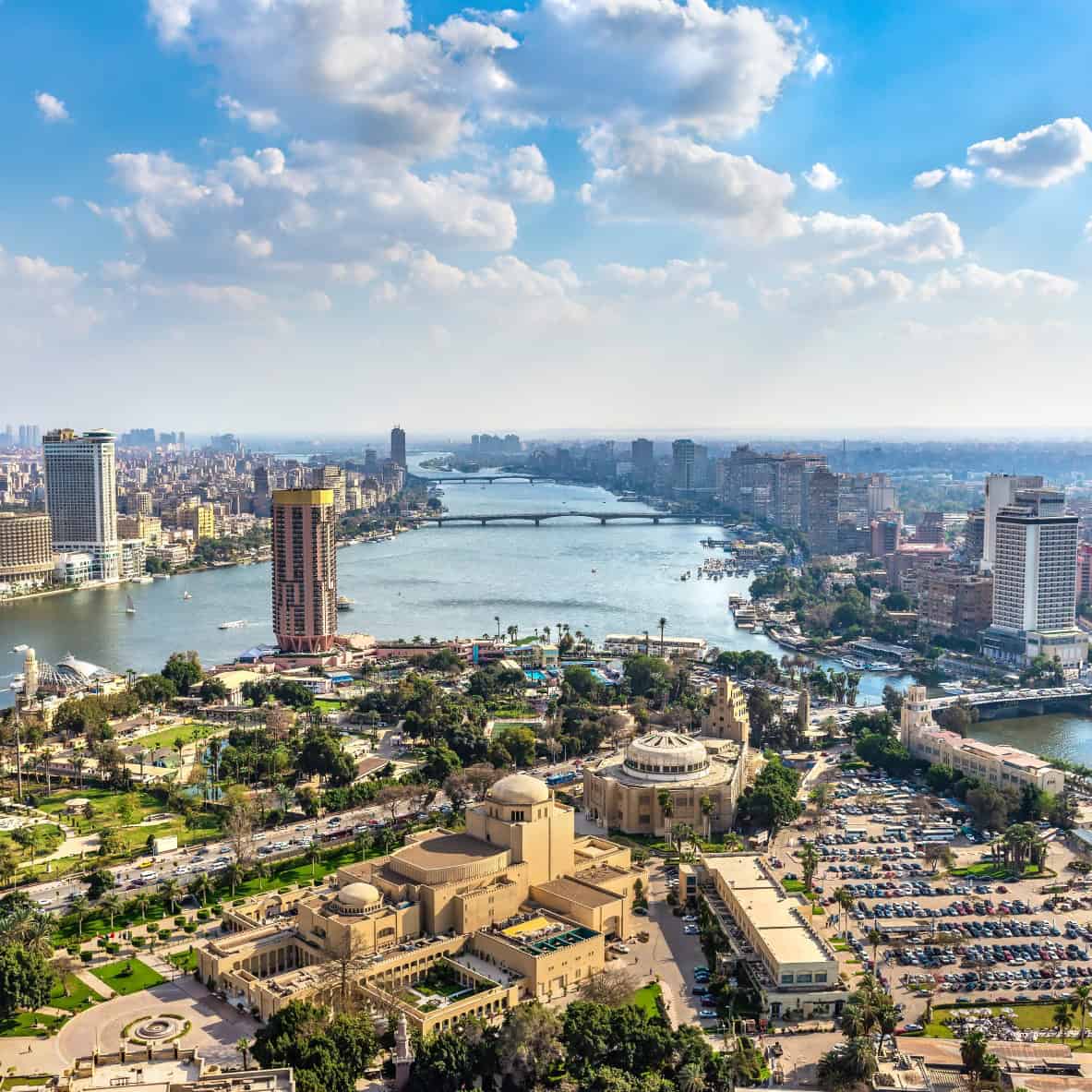
The Egyptian Citizenship by Investment framework is open to individuals and families who meet defined eligibility and compliance standards. Understanding these requirements early helps ensure a smooth, efficient, and fully compliant application process.
Applicants must be at least 18 years old and in good health. Medical checks may be required to ensure compliance with health standards.
A clean criminal record is mandatory. Applicants undergo due diligence to maintain the integrity and security of the Egyptian CBI programme.
Applicants must provide evidence of legitimate fund sources. Citizenship360 assists in verifying and documenting your financial background.
The CBI programme allows you to include your spouse and dependent children under 18, ensuring that your entire family benefits from Egyptian citizenship.
Once granted, citizenship can be passed to future generations, establishing a lasting legacy for your family.
The Egyptian citizenship application process follows a formal and structured framework. Each stage is designed to ensure compliance, efficiency, and transparency, with professional guidance supporting applicants from initial consultation through to approval.
Discuss objectives with Citizenship360 to determine the most suitable investment route and confirm eligibility.
Proceed with the chosen investment pathway—contribution, property acquisition, bank deposit, or business investment—fulfilling all legal requirements.
Compile all necessary documentation, including identity proofs, financial statements, police clearance, and property or investment records.
Citizenship360 submits your complete application to the relevant Egyptian authorities, ensuring accuracy and regulatory compliance.
Egyptian authorities conduct thorough due diligence. Once approved, you receive confirmation of citizenship eligibility.
After fulfilling all requirements and receiving approval, you are issued Egyptian citizenship documents and passport, completing the CBI journey.
The average processing time for Egypt’s CBI programme is approximately 3 to 6 months, depending on the complexity of the application and due diligence checks.

For enquiries of any kind please click the button below and a member of the team will be in touch.
Programme details last reviewed: July 2026.
Applicants must be 18 or older, have a clean criminal record, and meet the minimum investment thresholds. Evidence of legitimate fund sources is also required.
Yes, spouses and dependent children under 18 can be included, ensuring your family can enjoy the benefits of Egyptian citizenship.
No, the programme does not mandate long-term residency or language proficiency.
Typically 3 to 6 months, subject to due diligence and volume of applications.
Citizenship allows you to live, work, and study in Egypt, own property, and access business opportunities. It also enables the passing of citizenship to future generations.
Egypt generally taxes residents on their worldwide income. Holding citizenship alone does not automatically create tax obligations, but you should seek professional tax advice if considering long-term residence.
Properties must be government-approved. Citizenship360 will guide you in selecting qualifying real estate that meets programme criteria.
Yes, Egypt allows dual citizenship, enabling you to retain your original nationality.
There are four government-set routes: a non-refundable USD 250,000 contribution to the public treasury; a USD 300,000 real estate purchase held for five years; a USD 350,000 investment in an Egyptian company plus a mandatory USD 100,000 non-refundable donation; or a USD 500,000 non-interest-bearing bank deposit held for three years. A non-refundable government fee of USD 10,000 applies to the principal applicant on every route. Professional, legal and due diligence fees are additional and depend on family size and the complexity of your source of funds evidence, so we quote those individually. Figures verified August 2026.
The underlying statute is Law No. 26 of 1975 on Egyptian Nationality. Law No. 173 of 2018, ratified on 14 August 2018 and published in the Official Gazette that day, created the deposit residency category and added article 4 duplicate to the 1975 law. Law No. 190 of 2019 established the direct investment routes, and the programme began operating in June 2020. The thresholds currently in force were set by Prime Minister’s Decree No. 876 of 2023, issued on 7 March 2023.
The principal is repayable after the three-year holding period, but two conditions matter. It earns no interest, and it is returned at the exchange rate applying on the withdrawal date. The Egyptian pound traded near EGP 16 to the US dollar in March 2022; the Central Bank of Egypt floated the currency on 6 March 2024 and it fell roughly 38 per cent to around EGP 50, reaching about EGP 52.8 by March 2026. An investor who deposited before the float and withdrew after it would have taken a significant loss in dollar terms. Confirm the deposit currency and repayment terms with the bank in writing before committing.
The decree cut the real estate minimum from USD 500,000 to USD 300,000 and allowed purchases from any Egyptian company rather than only state-owned property. It cut the capital investment threshold from USD 400,000 to USD 350,000 but added a mandatory USD 100,000 donation, and removed the requirement to hold at least 40 per cent of the company’s shares. It reduced the bank deposit option to USD 500,000 over three years, from USD 750,000 over five years or USD 1 million over three. It permitted instalment payments over one year on the donation and real estate routes, and removed the requirement that funds be transferred from outside Egypt.
Three practical rules were introduced on the real estate route. Joint purchases became acceptable provided each applicant’s individual share exceeds USD 300,000; purchases from private developers require an Egyptian bank account with the funds transferred in US dollars; and building permit verification became mandatory for every property included in an application.